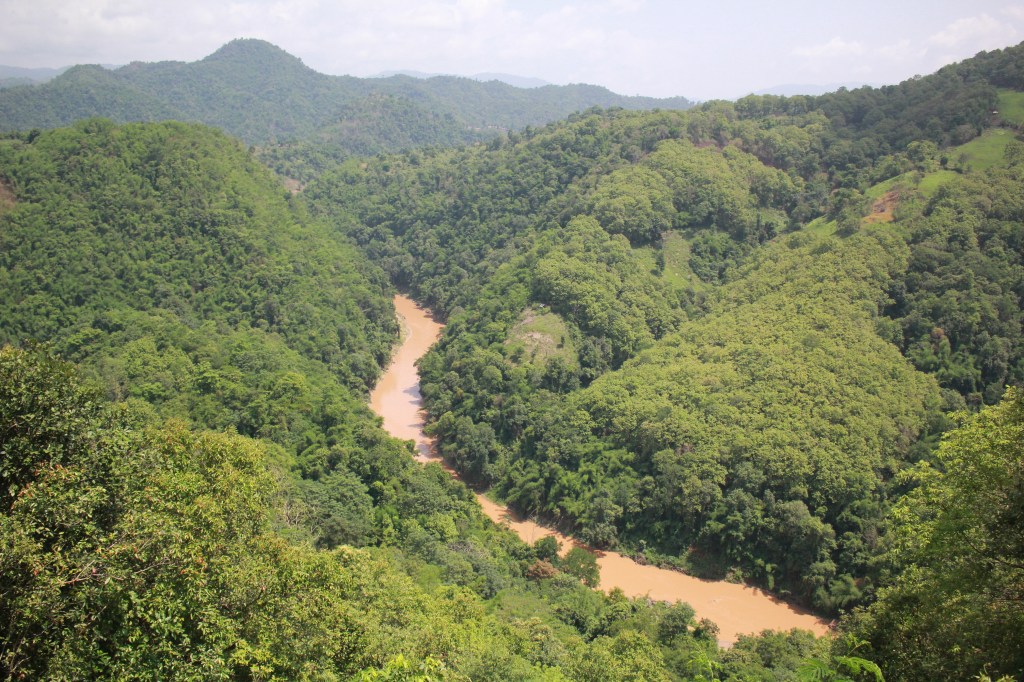
Bangkok, 30 July 2025 — The ETOs Watch Coalition has submitted an additional urgent communication to Dr. Tlaleng Mofokeng, United Nations Special Rapporteur on the Right to Health, regarding an unfolding cross-border environmental and public health crisis. The coalition reports that toxic contamination from rare earth and gold mining operations in Myanmar’s Shan State is now directly affecting communities in northern Thailand through polluted waterways flowing into the Mekong River and its tributaries.
This additional submission follows the Special Rapporteur’s official country visit to Thailand in February 2025, during which she met with representatives of civil society, including the ETOs Watch Coalition. At the time of the visit, this critical evidence was not yet available, but new scientific findings in recent months have revealed what the coalition calls a “quiet but dangerous” health emergency affecting transboundary waters shared between Myanmar and Thailand.
According to the coalition, satellite imagery released by the Shan Human Rights Foundation (SHRF) shows rapid expansion of rare earth and gold mining activities in mountainous areas of Shan State near the Thai border. These operations are located in the headwaters of the Kok, Ruak, and Sai Rivers, which flow into Chiang Rai Province in northern Thailand. The images reveal drastic deforestation, landscape alteration, and the presence of massive, unregulated tailings ponds situated dangerously close to water sources—violating international environmental standards.
Supporting this evidence, Thailand’s Pollution Control Department has found alarmingly high levels of toxic heavy metals in these rivers, including arsenic, lead, manganese, and mercury—substances known to be byproducts of industrial-scale mining. The contamination levels in some areas exceed Thailand’s national water quality standards.
Most significantly, a study by the Thailand Science Research and Innovation agency (TSRI) employed advanced “Participatory Environmental Forensics” techniques, including Environmental DNA (eDNA) analysis, to detect unique chemical and biological “fingerprints” of the contaminants. The results confirmed that the pollutants found in northern Thai rivers match the specific chemical signatures of mining waste from operations in Shan State, establishing a direct and scientifically verified link between the source and the health impacts being experienced downstream.
The impacts on local communities are already being felt. Residents in Chiang Rai Province who depend on these rivers for drinking water, agriculture, and fishing are reporting acute health symptoms such as skin rashes, darkened skin spots, diarrhea, and unexplained illnesses. Fish species like the Siamese tigerfish are also showing visible signs of distress, with ulcers and lesions on their bodies. Some fish have tested positive for heavy metals in their digestive systems, indicating bioaccumulation from the environment. This contamination threatens not only human health, but also food security and the local economy, particularly for small-scale fishers and farmers.
The long-term health risks are even more concerning. Chronic exposure to heavy metals—even in small amounts—can lead to cancer, neurological disorders (especially in children exposed to lead and mercury), and liver or kidney failure. Vulnerable groups such as children, pregnant women, the elderly, and low-income farmers are at the highest risk of harm.
The ecosystem is also under siege. The contamination is damaging the biodiversity of the Mekong River basin, one of the world’s most vital freshwater ecosystems. Heavy metals in soil and sediment can persist for decades, causing cascading effects throughout the food chain and making environmental remediation extremely difficult.
Despite clear evidence, government responses remain limited. In Thailand, the authorities have so far issued public warnings and water quality monitoring advisories, but have not taken diplomatic or legal action to address the root cause of the contamination across the border. In Myanmar, the mines are located in territory controlled by the United Wa State Army (UWSA), limiting the capacity of the central government to enforce regulation. The coalition argues that direct engagement with de facto authorities in the region is necessary.
Additionally, the coalition raises concerns about China’s role. Credible information suggests that Chinese companies are financing and providing technology for many of these rare earth mines, and China remains the largest buyer of their output. Therefore, the ETOs Watch Coalition urges the Chinese government to ensure that its overseas investments uphold international human rights and environmental standards.
In their letter, ETOs Watch urges the UN Special Rapporteur to include this case in her official Thailand country report and to issue formal communications to the governments of Thailand, Myanmar, and China. They also call for the establishment of a transboundary water quality monitoring mechanism, mandatory supply chain due diligence by buyers and investors, the creation of a remediation and compensation fund for affected communities, and the immediate suspension of harmful mining operations at the source.
“This is not a local or isolated incident—it is a regional public health crisis,” said Teerachai Sanjaroenkijthaworn, ETOs Watch Coalition Coordinator. “We call on the United Nations to use its mechanisms to hold states and companies accountable and to protect the fundamental rights to health and a clean environment for all people in the Mekong sub-region.”
The coalition has pledged to provide further information as needed and expressed hope for a timely response from the Special Rapporteur and the UN Human Rights system.
…
Please read full additional submission below
 ETOs Watch
Leave a comment